Showing posts with label Cultural Studies. Show all posts

March 10, 2020

Assignment : Paper no. 8

          Assignment
        Cultural Studies 
      Postmodernism 

Name :- Nirali Makvana 
Sem :- 2 ( 2019 - 20 )
Roll no. :- 14
Subject :- Cultural Studies 
Topic :- Postmodernism 
Submitted to :- Department of English,  Maharaja Krishnakumarsinhji Bhavnagar university 
Enrollment no.  :- 2069108420200023

Key Points :-

🔹️Introduction 
🔹️Definition 
🔹️Why Postmodernism is a important part of Culture Studies 
🔹️Difference between modernism and Postmodernism 
🔹️Have Postmodernist thinkers deconstructed the truth 
🔹️Postmodernism in Pop Culture 
🔹️Major postmodernist 
🔹️Conclusion 
🔹️Work cited

Introduction  :-

Postmodernism is a movement that developed in the mid - late 20th century. It is the reaction against modernism and spread across the art, architecture, Criticism and Philosophy. It is generally defined by an attitude of ideology of modernism, Skepticism, Irony, rejection of the grand narratives, search for truth, the impact of ICT on social life, consumerism, Globalization etc. The main themes of postmodernism are morality, truth, human nature, reason, Science, Objective reality, Social progress etc. I will discuss here the definition of Postmodernism, difference between Modernism and Postmodernism, famous Postmodernist and their work which are based on Postmodernism. Their view about Modernism. So, now let us discuss  in detail. 

Definition :- 

According to Merriam Webster Dictionary Postmodernism is,

" Of, relating to, or being any of various movements in reaction to modernism that are typically characterized by a return to traditional materials and forms or by ironic self reference and absurdity. "

" Of, relating to or being a theory that involves a radical reappraisal of modern assumptions about Culture, identity, history or language. "

According to Glossary definition Postmodernism is, 

" A general and wide ranging term which is applied to literature, art, philosophy, architecture, fiction, Cultural and literary criticism among others. Postmodernism is largely a reaction to the assumed certainty of scientific or objective efforts to explain reality. "

Why Postmodernism is a important part of Cultural Studies :-

Postmodernism questions everything rationalists European philosophy held to be true, arguing that it is all contingent and that most cultural constructions have served the function of empowering members of a dominant social group at the expense of others. Postmodernism, like Poststructuralism and deconstruction, is a critique of the aesthetic of the preceding age, but besides mere critique, Postmodernism celebrates the very act of dismembering tradition. 

Frederic Jameson connects Postmodernism and modernism with particular stages of Capitalism and are to some extent construed by it. Realism was the main theme or style at the time period of 18th and 19th century. Frederic Jameson divides Capitalism into four main parts.

🔷️ Market Capitalism :-

 With its new technologies such as the stream engine that transformed everyday life. 

🔷️ Monopoly Capitalism :-

  It is associated with electricity and internal combustion. 

🔷️ Consumer Capitalism :-

  It is placed on advertising and selling goods. 

🔷️ Information age :-

The time period of development of Science and technology. The present is generally called the age of Information. 
Now let us see how Modernism and Postmodernism are differentiating to each other. 


  • Modernist literature rejected the Victorian aesthetic of prescriptive morality and using new techniques drawn from psychology, experimented with point of view, time, space and stream of consciousness writing. The major writers of the Modern age who radically redefined poetry, fiction and other works included Virginia Woolf, Ezra Pound, T. S Eliot, James Joyce, William Falkner, Franz Kafka etc. Modernist novels sought to be metafictive or self referential about their status as texts, their production as art and their reception.
  • While on the other hand Postmodernism borrows from disillusionment with the givens of society; a penchant for irony; the self conscious " Play " within the work of art; fragmentation and ambiguity and a destructured, dehumanised subject. Postmodernism celebrates the activities of fragmentation rather than does not only the mourn of meaning. Postmodernism explores the provisionality and irrationality of art.

Have postmodernist thinkers deconstructed the truth  ?

The best known Cultural theorist Bruno Latour, famous for inaugurating the field of " Science Studies," which sought to examine the truth claim of science by exploring how those truths were established in the term of their Social, Political and Cultural foundation, wrote an article entitled, " Why Has Critique Run Out of Steam ? From Matters of Concern?" In this article Bruno Lutour put his thoughts and shared his idea that the field of Cultural studies, with its " Weapons " of critique, deconstruction and relativism and its rejection of grand narratives, stable definition and eternal truth, had been complicit in creating a world in which all knowledge was seen to be relative, partial site specific and therefore doubtful. Latour notes, " I myself have tried to show the lack of scientific certainty inherent in the construction of fact."

Latour argued that there is no such thing as, " natural unmediated, unbiased access to truth. " And that we are always prisoners of language that we always speak from a particular standpoint. This is all about the views of Latour for the question have postmodernist thinkers deconstructed the truth?

Postmodernism in Pop culture :-
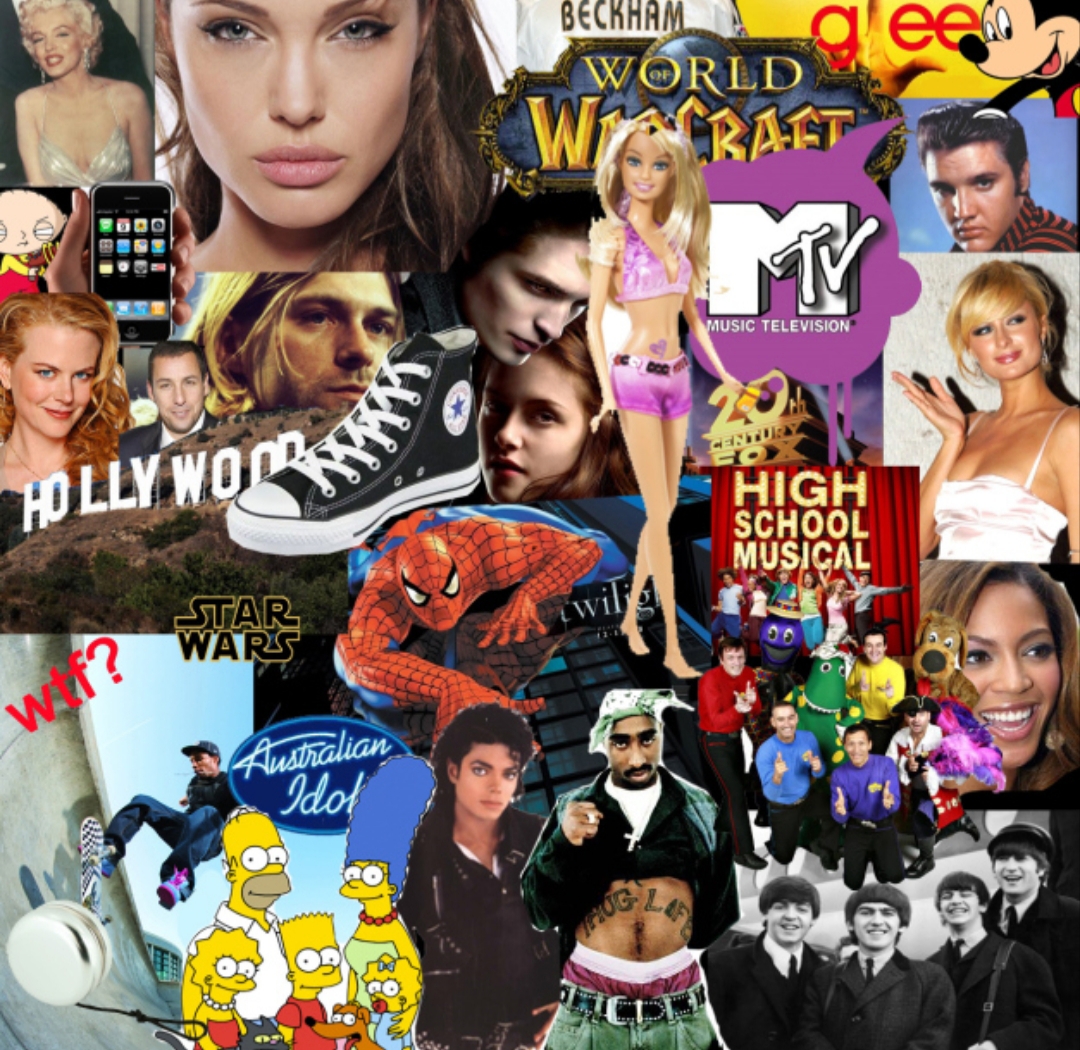

We can say that Postmodernism can come in many different forms as different people have different ideas. The people who take part in the debate of modernism and Postmodernism, share a unanimity that Postmodernism might be many things but certainly it linked with the growth of popular culture in the late twentieth century in the west. Postmodernism generally rejects stereotypes of all kinds. And also it embraces the notion of nostalgia in art like film, television, advertising and uses multiple references to communicate on the variety of symbolic level. In the word of Susan Sontag , a critic of American Culture, Postmodernism came with the emergence of a " new sensibility " and this involves a blurring of the distinction between " high " and " low " culture. Generally culture was that which would be accepted into a museum, it was homologous relationship with the elitism that is inherent in class society. The means is that the drive towards Postmodernism in the late 1950s and 1960s was associated with the elitism of modernism. A good example of Postmodernism is that popular culture can be seen in the American and British pop art movement of the 1950s and 1960s as it rejected the division between high culture and popular culture. This can be said to be " Postmodernism's first cultural flowering. " One of the famous Pop art's first prominent theorists Lawrence Alloway explains that, " the area of contact was mass produced  urban culture : movies, advertising, Science fiction, pop music. We felt none of the dislike of commercial culture standard among Intellectual but accepted it as a fact, discussed it in detail and consumed it enthusiastically. " This acceptance allowed people to treat popular culture in the realm of serious art and not a second tier of culture. 

Major Postmodernist and their views about Postmodernism:-

Jean Baudrillard:-

Jean Baudrillard was a French Sociologist, philosopher and cultural theorist. He is best known for his analysis of media, contemporary culture and also he is best known for his two major terms," Simulation " and " Hyperreal." For Baudrillard " Postmodernism marks a culture composed  of disparate fragmentary experiences and images that constantly bombard the individual in music, video, television, advertising and other forms of electronic media. The speed and ease of reproduction of these images means that they exist only as images, devoid of depth, coherence or originality. Now let us see brief information about hyperreal. Baudrillard has been referred to as " The high priest of Postmodernism. "

In Postmodernism hyperreal is an inability of consciousness to distinguish reality from a Simulation of reality especially in technologically advanced postmodern societies. For example 


Disney world and Las Vegas

The photos of a models in magazine which touched up with computers.

Jean Francois Lyotard :-

Jean Francois Lyotard is best known for his articulation of Postmodernism and the analysis of the impact of Postmodernity on the human condition. He was a sociologist, Literary theorist and philosopher. Jean Francois Lyotard argues that, " Stability is maintained through "Grand narratives " or " master narratives,"  Story a culture tells itself about its practices and beliefs in order to keep going. A grand narrative in American Culture might be the story that democracy is the most enlightened or rational form of government and that democracy will lead to universal human happiness. 

                   The Postmodern Condition:
                   A Report on Knowledge 
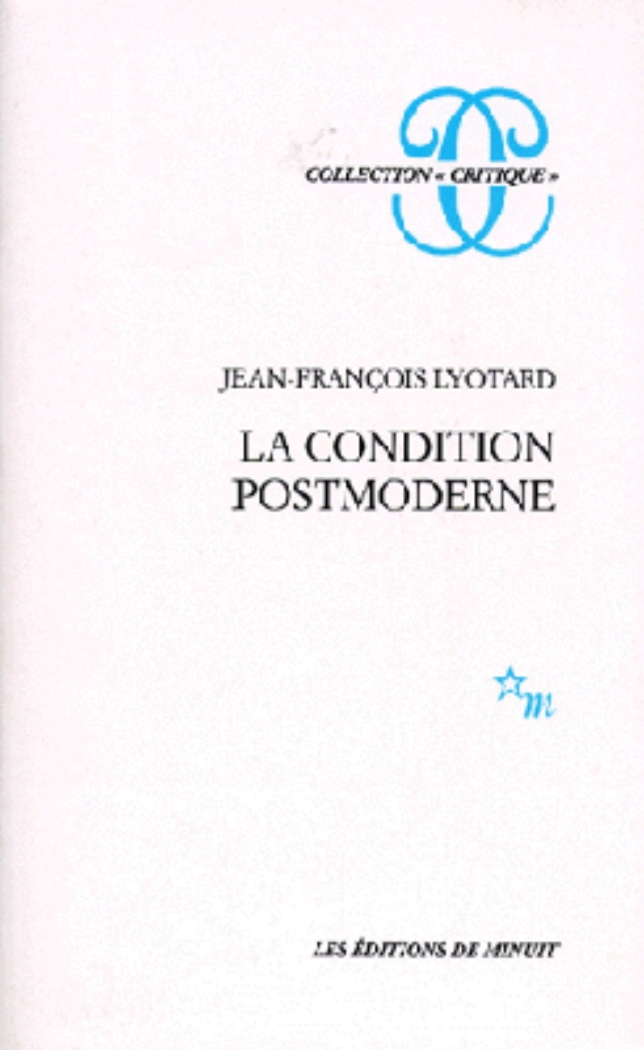

" The Postmodern Condition: A Report on Knowledge " is a book published in 1979 in which Jean Francois Lyotard analysis the notion of knowledge in postmodern society as the end of " Grand Narrative " or " Metanarratives " which he considers a quintessential feature of modernity. 

Conclusion :-

Thus, above all discuss it is clear that, what is Postmodernism. If anyone asks about the simple concept of Postmodernism than we can say that it was started during  mid - late 19th century and emerged in art, architecture, music, film, literature, sociology, communication, fashion and other many fields. Jean Baudrillard gave the term " Hyperreal " in which we can include many examples of modern time, especially advertisements. And also Jean Francois Lyotard, in his book, " The Postmodern Condition " discussed the grand narratives and metanarratives which are related to the Postmodern idea. And also I have put here how we can see Postmodernism in Popular culture especially in American Culture. 

Work Citation :-

Guerine, Wilfred L. A Handbook of
Critical Approaches to Literature.
Oxford University Press, 2005.

Latour, Brono. "Have Postmodernist
       Thinkers Deconstructed Truth?"
       New Humanist, 12 Mar. 2018,
       5296/have-postmodernist-thinkers-
       deconstructed-truth.

"Postmodernism In Pop Culture"               UKEssay.com 11, 2018. All Answer Ltd. 03,2020<https://www.ukessays.com/essays/media/post-modernism-in-pop-culture-and-the-simpsons-media-essay.php?vref=1>.

February 21, 2020

Thinking Activity : Cultural Studies Unit 4

                        Frankenpheme

         In Contemporary Indian Culture 


☆ Introduction :-

We all know that Cultural studies is the study of,

" Marxism, poststructuralism and postmodernism, Feminism, gender studies, anthropology, sociology, race and ethnic studies, film theory, urban studies, public policy, popular culture studies and postcolonial studies. "

So, as a part of film studies, gender studies, Feminism and race and ethnic studies , " Frankenstein " the worth study as a part of cultural studies.  Now let us discuss the term , " Frankenpheme and its reflection in contemporary Indian culture. 

☆ About Frankenpheme  :-

In the Routledge Literary Sourcebook  on Frankenstein Timothy Morton uses the word Frankenpheme drawn from,

♧ Phonemes :-  Sonic elements of language, as used in structural linguistic.

♧ Graphemes :-  Visual elements. 

as " elements of culture that are derived from Frankenstein. Either a separate work of art is inspired, or some kernal is derived from Shelley's novel and repeated in another medium. Frankenphemes demonstrate the extent of the novel's presence in world culture, as the encoding of race and class in the 1824 Canning speech in Parliament. 

☆ Frankenpheme in Contemporary Indian culture  :-


Author Christopher C. Doyle wrote the book The Mahabharata: Secret  connected with the myth of Ashoka and his nine men. Historically  Ashoka the great was known to have supressed science during his rules which is why the brotherhood legend came out. He used the brotherhood to hide all the scientific advances. May it was written between 200 BC to 500 BC. So, Doyle says that there could be something in the Mahabharata that was really scientific and also dangerous which he decided to hide.

Christopher C. Doyle had studied business management. He had weakness for a fantasy novel. Oneday he started writing a novel for his daughter.  Who was very much interested in the story based on the science and fantasy. Then he decided to write full novel. Doyle was also intrigued by the Indian epic, Mahabharata which translated into,  " this is what happened." He thought about the basis of the epic in history and science and moved forward with his writing. He said that,

" And if the Mahabharata was true, then it was possible that some of the fantastic events described in the Mahabharata could have a scientific base as well, which no one has explored as of now. "

In this book what Doyle put the story of Ashoka and of those his nine men and Ashoka's alleged suppression of science. Doyle visited such a some region where Ashoka and emperor's edict that are preserved there. Doyle said that, " the fictional weapon in the book used a totally different scientific concept which I had to built from scratch. The use of hard core science and accepted scientific facts to explain mythology was something that makes my book different. The book was nominated for the 2014 Crossword Book Award. The Mahabharata Quest : The Alexander Secret Doyle's second novel was released in 2014.

☆ The Popular artist and his Market  :-

              Jay Vasavada and his Market 


Jay Vasavada is a Gujrati Writer, Columnist and Orator, born in Gondal, Bhavnagar. He has published lots of books and he wrote column in various publications. He pursued his degree from Saurashtra university. He started his writing career at Rajkot through the publishing of one article. Then later on he joined Gujrat Samachar as a columnist.  He previously wrote daily column in Mumbai edition of Mid - day. And also he he delivers lectures across Gujrat on different subjects.

He hosted Gujrati celebrity talk show Samvaad on ETV Gujrati and performed Cameo in Gujrati film Bey Yaar in 2014. He delivers speeches on All India Radio and work as a writer and anchor of cultural T.V series Aaswaad on DD Girnar. His famous works are :

♧ Yuvahava
♧ Mahiti Ane Manoranjan
♧ Sahitya Ane Cinema
♧ Aah Hindustan Oh Hindustan
♧ Spectometre
♧ Life@Kite
♧ Science Samandar
♧ Vacation Station
♧ Mummy Pappa etc.

His Gujrati Articles are :

¤ એક વર્ષમાં લઘુનવલ લખવાની ઈચ્છા છે. 
¤ કૃષ્ણ કે અર્જુને બ્રહ્મચર્યની માત્ર વાતો કરી છે, પાળ્યુ નથી.
¤ સકારાત્મક પરિણામ માટે મતદાન કરવું.  etc

● His Market :-

Jay Vasavada is very famous in Instagram, Facebook, Twitter etc. Through these social media platforms he tries to increase their audiences. 

● Influence on Youth :-

He delivers very influential speech to Youth on various subjects. Mostly youth are influenced by his speeches and his articles.

☆ Conclusion  :-

Thus, above all information about Frankenpheme and example in contemporary Indian culture and the famous writer and his market , we can say that the Cultural studies is not only about the production of works but also the mean of production. The value and influence of any perticular work on youth and contemporary time is most important and worth study in Culture. So, Jay Vasavada is the best example of the author and his market.

References 


February 04, 2020

Thinking Activity on Cultural studies


Hello ! Readers,


                      You all are warmly welcome in my new blog about culture and cultural studies.  Before starting discussion about cultural studies I would like to put here some points of my understanding about culture. We all know that all human beings, animals, insects and others are very important part of our culture. Without culture may human being are not able to living life happily because without cultural aspects or roots human being can't able to find happy life anywhere because we all are binding together with different cultures like celebration of any festivals. Different foods, clothes, festivals, different religion, politics all are the very important parts of our culture. We try to living happily in different cultures. In short culture is all about the ritual or roots that binding human being together in one box.


Now let us discuss what is Culture and Cultural studies. 

☆ What is Culture ?


" A Culture is a way of life of a group of people  - the behaviour, beliefs, Values and symbols that they accept,generally without thinking about them and that are passed along by communication and imitation from one generation to the next. "


☆ What is Cultural studies  :-


Mostly American college class suppose to do cultural studies.

For example,  American students are reading novel by Alice Walker's " The Color Purple  ( 1982 ) . On this book the professor identifies some references and tries to describe novel as a multilayer narrative structure and some other topics like feminist critique of American gender and racial attitudes.  Students and professors both are doing discussion on that and tries to analyse key points of the novel and various approaches.  Students raises their hand and ask a questions to the professor  : Did Alice Walker betray African American with her harsh depiction of black men ? The professor replies : " Well I just want to know what a serious film was doing with Oprah Winfrey in it ?" Another points are responding by other students that, examining interrelationships among race, gender, popular culture, the media, the literature.  The professor concluded with one short answer that Walker portrays in constructing her characters and communities in " The Color Purple. " The practice is all about the part of Cultural studies. 

Cultural studies was influenced by Structuralism and poststructuralism. " To erase the boundaries between high and low culture, classic and popular literary texts and literature and other cultural discourses that following Derrida may be seen as manifestation of the same textuality. " These are all about culture studies.

Now let us discuss four goals of Cultural studies  :

☆ Four Goals of Cultural studies  :-

1. Cultural studies transcends the confines of a particular disciplines such as literary Criticism or history  :-

Cultural studies involves scrutinising the cultural phenomenon of a text. For example, Italian Opera, a Latino telenovela, the architectural style of prisons, body piercing  and drawing conclusions about the changes in textual phenomena over time. Cultural studies is not necessary about literature in the traditional sense or even about art. In the introduction of " Cultural studies " Lawrence Grossberg, Cary Nelson and Paula Treichler emphasize that, " The Intellectual promise of cultural studies lies in its attempt to cut across diverse social and political interests and address many of the struggles within the current scene.  " Intellectual works are not limited by their own " borders" as a single texts, historical problems, or disciplines and the critic's own personal connection to what is being analyzed may also be described. 

2. Cultural studies is politically engaged  :-

Cultural critics see themselves as to many of the power structures of society at large.  They questions inequality within power structures and seek to discover models for restructuring relationships among dominant and Minority or Subaltern discourses.  Because meaning and individual subjectivity are culturally constructed. Such a notion taken to a philosophical extreme, denies the autonomy of the individual whether an actual person or a character in literature, a rebuttal of the traditional humanistic Great Man and Great Book ,theory and a relocation of aesthetic and culture from the ideal realm of taste and sensibility,  into the arena of a whole society's everyday life as its constructed.

3. Cultural studies denies the separation of " High " and " Low " or elite and Popular culture  :-

Cultural critics today work to transfer the term culture to include mass culture whether popular folk or urban.  Jean Baudrillard Andreas Huyssen argue that

After World war II the distinction among high, low and mass culture collapsed and they cite other theorists such as Pierre Bourdieu and Dick Hebdige on how " Good taste " often only reflects prevailing social, economic and political power basis. 

For example the image of India that were like Rudyard Kipling seem innocent but reveal an entrenched imperialist argument for the British white superiority and world wide domination of other races, especially Asians. But race alone was not the issue for the British raj : money was also a deciding factor. Transgressing of boundaries among disciplines high and low can make cultural studies just plain fun.

4. Cultural studies analyzes not only the cultural work, but also the means of production  :-

Marxist critics have long recognized the importance of such paraliterary questions as these :

▪ Who supports a given artist ?
▪ Who publishes his or her book ?
▪ And how are these books distributed?
▪ Who buys books ?
▪ For that matter, who is literature and who is not ?

A well known analysis of literary production is Janice Radway's study of the American romance novel and its reader, Reading the Romance: Women, Patriarchy and popular literature, which demonstrates the textual effects of the publishing industry's decision about books that will minimise its financial risk. Cultural studies thus joins subjectivity that is, culture in relation to individual lives with engagement, a direct approach to attacking social ills. Though cultural studies Practitioners deny Humanism or Humanities as universal categories, they strive for what they might call " Social reason " which often resembles the goals and values of humanistic and democratic ideals.

☆ Power at the centre at Cultural studies  :-


We all that in every culture there are some people in society who have different power in their hand and they try to control other marginalised people who haven't power and even haven't voice for raises their questions.  High cultured people always make their high place in society and rule in society.  We can include politicians and governments and other highar class people. So, we can say that power is at the centre in cultural studies. Now let us see simple definition of Power.

We can see also in Family, workplace, relationships etc. There are Six main Civic Arena Power :

1. Physical force 
2. Wealth 
3. State Action 
4. Social norms 
5. Ideas
6. Numbers

We can include Violence in physical force, laws and government includes state actions and also Democracy and Dictatorship. Crowd includes numbers. 

● How Power Operates  :-

There are three laws of Power :-

1. Power is never static.
2. Power is like water.
3. Power compounds. 

Thus, above all information we can say they power is most important subject for cultural studies as well as at the centre of the cultural studies. 

Thank you...

December 30, 2019

Workshop on Cultural studies

                           Cultural studies by
                           Dr. Kalyani Vallath 
                           From Kerala

Hello ! Readers,


                        Again you are all warmly welcomed in my blog. Today I am coming with very interesting and new topic about cultural studies, one days workshop by Dr. Kalyani Vallath ma'am from Kerala. The workshop had organized in Department of English, Maharaja  Krishnakumarsinhaji Bhavnagar university. First I would like to give shortly introduction about Dr. Kalyani Vallath ma'am. She is from Kerala and she has done her Ph.d from Canada university. She is providing knowledge about how to prepare NET and other exams through online courses as well as classes. She is very passionate teacher as well as very energetic in teaching. Now let us discuss about workshop.


As being a part of Culture, first it is most important to know about our culture properly because without knowing our culture we can't interact with other countries people. In the 21st century Culture is a globalization idea which provides entertainment, enjoyment to the people because we are always very exciting to know and want to do a part of other cultures. Different cultures shapes the life of human being and its connecting the society and human being each other. Each and every things are the very important part of the cultural. So, it is grateful thing to know about basic information of our culture. As a part of study we have a session on cultural studies in our Department. 


According to my understanding about the concept of cultural studies, whatever Kalyani ma'am taught us in workshop I would like to say,

Culture studies is interdisciplinary study. Whatever we experienced in our day today life it is all of the part of our culture. For example the food, the clothes, the language, the festivals etc. 

                           Different festivals 

                          Different Clothes

And also it relates to the larger society. Power relations is also one important part of our culture. The cultural studies developed in Britain as a reaction against liberal humanism and orthodox Marxism, as an engagement with new left 1950s. Ma'am also discussed about Frankfurt school in which we includes, 

Max Horkheimer
● Theodor Adorno
● Erich Fromm
● Herbert Marcuse
● Walter Benjamin 
● Leo Lowenthal etc. 

And also ma'am discussed about various points in cultural studies like,

1. Critical theory 
2. Hegelian Dialectical method
3. Dialectic of Enlightenment 
4. What is Enlightenment?
5. Why has Enlightenment failed?
6. Cultural industry 
7. New left 
8. Centre for contemporary cultural studies 
9. Pioneers of cultural studies 
10. Popular cultural studies 
11. Subculture studies 
12. Public sphere 
13. Posthumanism
14. Information society and network society 
15. Trauma studies 
16. Globalization studies: Disjucture
17. Queer studies 
18. Appadurai's five scapes
19. Performativity
20. Visual cultural studies 
21. Intersectionality 
22. Other disciplines and major journals etc. 

 If I will face interview and aksed about my view about cultural studies are :

Whatever we experienced in our day today life, it is the part of our culture. Sometime we faced other countries people and we visited other states or countries at that time we might be dealt with their food, the clothes, the festivals and whatever we feel differently these are all part of culture. Other thing is that cultural studies isn't only about money but it is about our relationships also. Cultural studies is mostly about Ideas. It is relate to the larger society. And it stands against idea of Marxism about humanism. Cultural studies, it is about ordinary people. These is all about my understanding about cultural studies. This is my answer if I will face interview. 

In that session so many examples given by Kalyani ma'am that I will never forget like,

¤ Her way of teaching that I liked most and I will try to teach in same in way, serious as well as in very entertaining way.

¤ Second example is about her face expression and some Keralian word that she naturally used in her speech, which creates laughter that I will never forget. 

¤ Third example is about her experience that she fought with her neighbour for flow of water and how she behaved with his neighbour.

¤ Forth example is about her experience of food in Singapore and in her flight.

¤ Fifth is about selfie time after finished session. 


Thank you.....