Showing posts with label Assignment. Show all posts

March 10, 2020

Assignment : Paper no. 5

                  Assignment 
     The Romantic Literature 
Keats's use of myths in his Odes 

Name :- Nirali Makvana 
Sem :- 2 ( 2019 - 20 )
Roll no. :- 14
Subject :- The Romantic Literature 
Topic :- Keats's use of Myths in his Odes
Submitted to  :- Department of English, Maharaja Krishnakumarsinhji Bhavnagar university 
Enrollment no  :- 2069108420200023

Key points 

🔹️Introduction 
🔹️Brief Information about author 
🔹️Keats's mastery on using myths and the Imagination 
🔹️Various myths in Keats's Odes
🔹️ Conclusion 
🔹️Work Citation 

Introduction  :-

" Heard melodies are sweet, but those unheard are sweeter. " 
                        - John  Keats 

The meaning of the line is that the power of imagination is often greater than reality. The purpose is  putting here the line because to show the word, " The Imagination " through which it is easy to identify the age of Romanticism. The Imagination is the main characteristic of the age. During the time period from 1800 to 1850 there was an influence of artistic, literary, musical and Intellectual that originated in Europe at the end of 18th century. The writers of the age influenced by the new style.  They thought that something new was happening in the world's affairs. William Blake's affirmation in 1793 that " a new heaven is begun " was matched a generation later by P. B Shelley's " The world's great age begins anew." Fresh ideals came to the fore; in particular the ideal of freedom long cherished in England. 

" These, these will give the world another heart / And other pulses. "

Wrote John Keats referring to Leigh Hunt and William Wordsworth. Keats used the Imagination in most of his work. Through the use of myths he creates various Odes in which we can clearly see his power of writing and imagination. Now let us see how he used myths in his Odes.

Brief information about author :-


" Beauty is truth, truth beauty,
   That is all ye know on earth,
  And all ye need to know. "

The Odes are Keats's most distinctive poetic achievements. They are essentially lyrical meditation on some object or quality that prompts the poet to confront the conflicting impulses of his inner being and to reflect upon his own longings and their relation to the wider world around him. He was one of the main figures of the Second generation of Romantic poets, along with Lord Byron and P.B Shelley. Keats is characterised by sensual Imagery, most notably in the series of Odes. Some of the most famous works of Keats are "Ode to Nightingale ","Sleep and Poetry " and the famous sonnet "On First Looking into Chapman's homer. "

Keats's mastery on using myths and the imagination :-

John Keats lived a very short life of 25 years, yet in his short time he enriched some of hights  and wrote famous poems. The desire to contrast the ideals of harmony, purity and beauty with the reality of the surrounding world forms the basis of Keats's aesthetics. He was looking for ideas in ancient times. Hellenism, in all of its power, can be seen in his " Ode to a Grecian Urn " and his two large poems, " Endymion ", " Hyperion." Keats believes that beautiful things had to be described in an expressive manner. The laconic style  of Milton also inspired Keats's imitations.  In " Endymion " , developing the myth about the love of the Moon for a poet - Shepherd, Keats demonstrated an unlimited power of imagination and fantasy, interweaving many ancient Greek legends and adding more complicated spiritualistic mood to them. " Hyperion " is Keats another poem based on the mythological plot. Here, he uses the Greek myth of Titan's defeat. Keats was looking for truth and beauty as he considered beauty to be the true essence of any phenomenon. The poetic credo of John Keats was formed within the framework of the aesthetics between two eras 18th and 19th century. 

Various myths in Keats Odes :-

Keats utilizes three mythological techniques most frequently the first might be called mythological sense. The Second is called Physical boundedness. The third one is called his use of embodied figures, initially anonymous mythological forms. Together these three attributes Keats to create a mythology of individual experience, mediating between the individual spirit and divine. For Keats vision is the mythological meaning of the individual soul. In " Ode to Nightingale " Keats put the lines,

That I might drink and leave the world unseen,
But on the viewless wings of poesy
I can not see what flowers are at my feet. " ( lines 19, 33, 41 ) 

Through this Keats enhance the sensuality of his forest space by limiting sight. While he uses smell, taste and touch to describe the world of the poem, again and again he emphasizes a lack of visibility. Keats addresses Nightingale as,

"That thou, Light - winged Dryad of the trees. " ( line 7 )

He uses mythological form. The implicit feminine sexuality of the nymph figure adds a sense of sexual longing to the narrator's desire for transport. The words, " tasting of Flora " implies a very different meaning, with the same sexual undertones as the Dryad. The reference to the " blushful Hippocrene "  spring near the Muses' domicile at Mt. Helicon introduces poetic inspiration into the landscape of sensual associations. These allusions allow the readers to access a pre - existing universe of icons, based on assumed knowledge of mythic forms with which Keats replaces visual description. 

" The Chariot of Bacchus and his pards."

Bacchus adds a visual texture to the darkness, as the image of the wine god surfaces for a moment, but the obliterating power of the narrator's fancy takes precedence over the mythological structure. By replacing Bacchus with a less embodied image he suggests that the concept of fancy transcends the physical longing represented by the mythological figure. Again John Keats put a mythological image of feminine sexuality for the Nightingale 

" Already thee ! Tender is the night,
And haply the Queen- Moon is on her throne, 
Cluster'd around by all her starry Fays;"   ( lines 36, 37, 38 )

Both in the particular form of Diana and the broader associations of the Moon as fertility goddess apply to the Nightingale. Keats says of his own location, " here there is no light." For the narrator the realm of classical images is subsumed in a visually limited, dark personal space. In " Ode to a Grecian urn " Keats describes the silence of the urn first and then visual imagery comes later. In this Ode Keats removes the sense of sound. In the first stanza of the poem Keats invokes,

" Tempe or the dales of Arcady. "

to ground the poem in the classical world, and his mention of " mad pursuit," " struggle to escape " forces an association with the pursuit of Syrinx or Daphne. Yet these identifications are questions; the stories at which he hints do not have the concrete meaning of mythological narrative. The most important thing is in the urn's representation is the narrator's concluding stanza on aesthetics removed from the classical tradition. Apollo and Daphne flit about the periphery of Keats's uncertain world. The mute urn is a particularly appropriate example of how the classical stories gain importance through absence and supplanting by modern consciousness. The Urn's  ambiguous landscape depends upon the implicit story for its creation. 

In " Ode to Psyche " Keats uses the imagination to show the speaker's intent to resurrect Psyche and reincarnate himself into Erose. Keats was exposed to a few sources of the Psyche myth. His contemporary sources for the myth included Lempriere's classical Dictionary and Mary Tighe's Psyche in 1805 work that Keats read as a child and returned to in 1818. Psyche is the youngest and most beautiful daughter of a King. She is so beautiful that  Aphrodite, the goddess of love and beauty, is jealous of her. She sends her son, Eros, the god of love to punish Psyche for being so beautiful. One night, Psyche lights a lamp in order to catch a glimpse of her lover, but Eros gets angry with her for breaking his trust and leaves her. After nearly dying from one of the tasks, Eros asks Zeus to transform Psyche into a goddess so the two can be together. Keats must have found the story attractive and the story of the woman so beautiful that love fell in love with her.

Keats sent the poem to his brother on 3 May 1819 with an attached letter saying, 

" The following poem, the last I have written is the first and only one with which I have taken even moderate pains; I have, for the most part, dashed off my lines in a hurry; this one I have done leisurely; I think it reads the more richly for it, and it will I hope encourage me to write other things in even a more peaceable and healthy spirit. " ( Houghton, 2008 )

Conclusion  :-

Thus, on the basis of above all information I conclude that Keats use of mythology is personal and without any extra literary design. Mythology provides him with substance not only for his poetry but also for his philosophy. It leads him to a depend understanding of man and the universe. He retells myths as though they are his own creations. He brings together different mythological stages and presents them as co- existent. In the major odes of Keats the Great goddess appears variously. For example in the " Ode to Psyche." In the " Ode to Nightingale " Keats uses more than one Greek mythology. So, Keats's uses of various myths in his work and his power of the Imagination made him the great poet at that time.

Work Citation :-


Semerenko, L. “Myth and Beauty in the Intertextual Structure of John Keats's Poetry .” Alfred Nobel University Journal of Philology, 1 Mar. 2018, https://www.researchgate.net/publication/328024054_Myth_and_beauty_in_the_intertextual_structure_of_John_Keats'_poetry.

Sheley, Erin. “Re - Imagining Olympus: Keats and the Mythology of the Individual Consciousness [1].” Romanticism on the Net, 22 May 2007, https://www.erudit.org/en/journals/ron/2007-n45-ron1728/015826ar/.

HASAN, SEEMIN. 1993, pp. 1–289.

Assignment : Paper no. 6

                                   Assignment 

        The Victorian Literature 

" Oliver Twist " as a novel full of thievery 

Name :- Nirali Makvana 
Sem :- 2 ( 2019 - 20 )
Roll no. :- 14
Subject  :- The Victorian literature 
Topic :- " Oliver Twist " as a novel full of thievery 
Submitted to  :- Department of English, Maharaja Krishnakumarsinhji Bhavnagar university
Enrollment no. :- 2069108420200023

Key Points :-
  • Introduction 
  • Brief information about author 
  • The reason behind spreading thievery during the time of Victorian era 
  • Fagin and his gang as the main thieves throughout the novel. 
  • Mrs. Mann as a greedy character of the novel 
  • Oliver Twist: A thief or a Victim?
  • Conclusion 
  • Work citation 

Introduction :-

 
" Oliver Twist : Parish Boy's Progress " was first published in 1837 to 1839 as a serial. It is Charles Dickens's second novel about the story of Orphan child Oliver, who was born in Workhouse and sold into externship with an undertakers. The novel "Oliver Twist " opens the reality of the black business of the undertakers in  the time of Victorian society. The novel gives glimpses of the Victorian Society and its people in many ways like Child Labours, Workhouses, lust for money and wealth, thievery etc. all these were centred at the time of Victorian Society after the reign of queen Victoria. Charles Dickens started writing this novel after the adoption of " Poor Law " in 1834, which halted government payments to the able - bodied poor unless they entered Workhouses. Thus, Oliver Twist  became vehicles for social Criticism aimed directly at the problem of poverty in 19th Century, 
London.  Generally they were hungry for wealth. So, we can see thievery was the main problem at that time. Charles Dickens very beautifully portrays the picture of the lustful society  in his novel, " Oliver Twist. "  Now let us discuss thievery as the main theme of the novel.

Brief information about author :-

         " It was the best of times, it was the worst of time,
 It was the age of wisdom, it was the age of foolishness,
                             It was the epoch of belief. "

The lines has been taken from the novel " A Tale of Two Cities " by Charles Dickens. It tells a story of contrast and comparison between London and Paris during the French Revolution. Through this passage Charles Dickens wants to say that it was the time when, rich had become more richest and poor had become more poor. The intention of putting this passage here is that we can simply imagine the writing style of Charles Dickens. He was an English Writer and Social Critic. He is regarded by many as the greatest novelist of the Victorian era because of he created some of the world's best fictional characters. His novels and short stories are widely read today. The genre of his novels included picaresque novel tradition, melodrama and the novel of sensibility. Satire and Irony are the main themes of his novels. His writing style is marked by a profuse linguistic creativity. 

The reason of spreading thievery during the time of the Victorian era :-

In the middle of the 19th century crime and poverty were the mixed main problems during the time of the Victorian era. Lots of people were the prey of poverty and suffered in the prison. It was the great time for Industrial Revolution, when people moved toward Cities especially in London without any tension of homes. It was the time when mostly children were widely roaming in the streets and they had no education and never heard the word of kindness. The language they learn from elders or whoever they met in the streets they were only speaking  vulgar language, shouted and cursed. They never taught which was right and which was wrong. So, the result was that they were taking food without paying money and they were caught and punished for it. These are the main reasons for  spreading thievery during the time of the Victorian era. The same conditions Charles Dickens portrayed in his novel " Oliver Twist " through the characters of Fagin, Charley Bates, Artful Dodger, Bill Sikes, Monks and many others. 

Jeannie Duckworth, in her book " Fagin's Children: Criminal Children in Victorian England " quotes Charles Dickens, who in the preface of the 1841 edition of Oliver Twist drew an outline to which many homeless children were conducted :

" The Cold, wet, shelterless midnight street of London; the foul and frowsy dens, where vice is closely packed and lacks the room to turn the haunts of hunger and disease, the shabby rags that scarcely hold together: where are the attractions of these things ? ( Duckworth 2 )

Fagin and his gang as a main thieves throughout the novel :-

Fagin is an Old man in London, who teaches pickpocketing to the young homeless boys and then fences their stolen goods. Although sometimes he shows a certain loyalty and solitude toward the boy. The group of Fagin is the villainy in the novel. One member of the Fagin's gang is Artful Dodger, who is playfully taking Oliver in their gang and teaches him robbery and steal. In this gang Oliver seems very differently than others. During the action of robbery at the Mrs. Maylie's house he cries out loud,

" Oh ! For God's sake let me go ! Let me run away in the fields. I will never come near London - never, never ! Do not make me steal ; have mercy upon me ! " ( 2007 : 205 )

Charles Dickens clearly shows that Oliver is born in a society which does not welcome him in a pleasant or loving way. Many young juveniles were caught in the action, brought in front of the magistrates sentenced to go to  prison or to be hung. Just like Artful Dodger. They will make Artful nothing less than a lifer. Even Bill Sikes is a rough and barbaric man, career criminal associated with Fagin and an eventual murderer. He is aggressive and violent. He is Charles Dickens's most vicious character and a very strong force in the novel when it comes to having control over somebody or harming others. Dickens does give him some shading : at the robbery in the countryside, Sikes rather than leave Oliver at the scene of his botched burglary of Rose Maylie's house, picks him up and runs with him as far as he can. After he brutally beats Nancy to death, he apparently is capable of feeling guilt although this is essentially suspicious that Fagin lied to him about her betrayal and fear of the possibility of being caught. His prostitute girlfriend Nancy tolerates his violent and lawless behaviour, perhaps because she, being a thief since the age of six. However when he thinks Nancy has betrayed him, Sikes viciously murders her.

Mrs. Mann as a greedy character of the novel :-

The amendment of the poor law was introduced in 1834, this law was made to disapprove of poor people living in workhouses. Workhouses were horrible places to be, only people who had no other choices would live and work there. The character Mrs. Mann took care of the children but did a terrible job of it. She mistreats the children, Mr. Bumble
 who is her superior  is supposed to check on her but he puts up with her and her wrong doing. Mrs. Mann is shown as this masculine woman who is the contrast of a motherly role. The name Mrs. Mann is ironic because she acts masculine and has the word ' Mann ' in her name. She is greedy and she is taking money that should be spent on the children's food. She uses the method of flattery towards Mr. Bumble by saying,

" Why, you are quite a literary character, sir ! "

She uses hypocrisy in her actions. Thus, Mrs. Mann also plays a vital role in the novel as a greedy character. 

Oliver Twist: A thief or a Victim?

Throughout the novel the reader can clearly notice how Charles Dickens underlines the features of Oliver's face. The end of the novel is happy but the question is if Mr. Brownlow didn't enter into his life and saved him than Oliver as a criminal like Fagin and Artful Dodger. We can say that Oliver would have simply become a thief, against his own will, one of Fagin's top quality thieves, as Monks wanted to him. Oliver's wish is to turned away all wickedness. The features on his face reflect the inner quality of his soul. He is not like the other boys who lived with him in the Workhouses because his thoughts are filled with, " angels, heaven, kind faces." And we can find out this in his dialogue, 

" I will be good indeed; indeed. Indeed, I will sir !" ( 2007 : 34 )

Even in his speech he is very polite. We can see his humbleness when he asked for food in Workhouse,

" Please, Sir, I want some more. "

When Fagin teaches him pickpocketing, Fagin realises him it will make him " the greatest man of all time." On the other side in contrast Oliver wonders to himself " What picking the Old gentleman's pocket in play had to do with his chance of being a great man." At the end of the novel after the all behaviour and politeness of Oliver we came to know that he wants to remain with people who love and care about him. Oliver does not belong to the criminal world. 

Conclusion :-

Thus, above all description about Oliver Twist and thievery as the main theme of the novel I conclude that the story of Parish boy Oliver is the main child hero of the novel. But the main point is that Charles Dickens put him on  a different level. In the age of Victorian Workhouses established. The result was that there were increased a lot of problems in society. Child labour and thievery were the main problems in the society. The Amendment of Poor Law was established in 1834 but it wasn't becoming successful. So, through the character of Oliver Twist, Charles Dickens portrayed the pictures of Victorian society. There were many people like Mr. Bumble, who ran the Workhouses and did business of child Labouring. And also the people like Fagin, Artful Dodger and Bill Sikes who did business of pickpocketing and ran schools for that. Many Orphans were going there only because they had nothing left in their life. So, the novel Oliver Twist enriched a different level in the age of Victorian and in today also.

Work citation  :-


Horne, Philip. “Crime in Oliver Twist .” 15 May 2017, https://www.bl.uk/romantics-and-victorians/articles/crime-in-oliver-twist.

Didelyte, Dovile. “Charles Dickens's Oliver Twist A Thief or a Victim?” 2008.

Terci, Mahmut. “The Gentleman of Birth: Oliver Twist .” European Journal of Language and Literature , Apr. 2016, doi:http://dx.doi.org/10.26417/ejls.v4i1.p104-116.


Assignment : Paper no. 8

          Assignment
        Cultural Studies 
      Postmodernism 

Name :- Nirali Makvana 
Sem :- 2 ( 2019 - 20 )
Roll no. :- 14
Subject :- Cultural Studies 
Topic :- Postmodernism 
Submitted to :- Department of English,  Maharaja Krishnakumarsinhji Bhavnagar university 
Enrollment no.  :- 2069108420200023

Key Points :-

🔹️Introduction 
🔹️Definition 
🔹️Why Postmodernism is a important part of Culture Studies 
🔹️Difference between modernism and Postmodernism 
🔹️Have Postmodernist thinkers deconstructed the truth 
🔹️Postmodernism in Pop Culture 
🔹️Major postmodernist 
🔹️Conclusion 
🔹️Work cited

Introduction  :-

Postmodernism is a movement that developed in the mid - late 20th century. It is the reaction against modernism and spread across the art, architecture, Criticism and Philosophy. It is generally defined by an attitude of ideology of modernism, Skepticism, Irony, rejection of the grand narratives, search for truth, the impact of ICT on social life, consumerism, Globalization etc. The main themes of postmodernism are morality, truth, human nature, reason, Science, Objective reality, Social progress etc. I will discuss here the definition of Postmodernism, difference between Modernism and Postmodernism, famous Postmodernist and their work which are based on Postmodernism. Their view about Modernism. So, now let us discuss  in detail. 

Definition :- 

According to Merriam Webster Dictionary Postmodernism is,

" Of, relating to, or being any of various movements in reaction to modernism that are typically characterized by a return to traditional materials and forms or by ironic self reference and absurdity. "

" Of, relating to or being a theory that involves a radical reappraisal of modern assumptions about Culture, identity, history or language. "

According to Glossary definition Postmodernism is, 

" A general and wide ranging term which is applied to literature, art, philosophy, architecture, fiction, Cultural and literary criticism among others. Postmodernism is largely a reaction to the assumed certainty of scientific or objective efforts to explain reality. "

Why Postmodernism is a important part of Cultural Studies :-

Postmodernism questions everything rationalists European philosophy held to be true, arguing that it is all contingent and that most cultural constructions have served the function of empowering members of a dominant social group at the expense of others. Postmodernism, like Poststructuralism and deconstruction, is a critique of the aesthetic of the preceding age, but besides mere critique, Postmodernism celebrates the very act of dismembering tradition. 

Frederic Jameson connects Postmodernism and modernism with particular stages of Capitalism and are to some extent construed by it. Realism was the main theme or style at the time period of 18th and 19th century. Frederic Jameson divides Capitalism into four main parts.

🔷️ Market Capitalism :-

 With its new technologies such as the stream engine that transformed everyday life. 

🔷️ Monopoly Capitalism :-

  It is associated with electricity and internal combustion. 

🔷️ Consumer Capitalism :-

  It is placed on advertising and selling goods. 

🔷️ Information age :-

The time period of development of Science and technology. The present is generally called the age of Information. 
Now let us see how Modernism and Postmodernism are differentiating to each other. 


  • Modernist literature rejected the Victorian aesthetic of prescriptive morality and using new techniques drawn from psychology, experimented with point of view, time, space and stream of consciousness writing. The major writers of the Modern age who radically redefined poetry, fiction and other works included Virginia Woolf, Ezra Pound, T. S Eliot, James Joyce, William Falkner, Franz Kafka etc. Modernist novels sought to be metafictive or self referential about their status as texts, their production as art and their reception.
  • While on the other hand Postmodernism borrows from disillusionment with the givens of society; a penchant for irony; the self conscious " Play " within the work of art; fragmentation and ambiguity and a destructured, dehumanised subject. Postmodernism celebrates the activities of fragmentation rather than does not only the mourn of meaning. Postmodernism explores the provisionality and irrationality of art.

Have postmodernist thinkers deconstructed the truth  ?

The best known Cultural theorist Bruno Latour, famous for inaugurating the field of " Science Studies," which sought to examine the truth claim of science by exploring how those truths were established in the term of their Social, Political and Cultural foundation, wrote an article entitled, " Why Has Critique Run Out of Steam ? From Matters of Concern?" In this article Bruno Lutour put his thoughts and shared his idea that the field of Cultural studies, with its " Weapons " of critique, deconstruction and relativism and its rejection of grand narratives, stable definition and eternal truth, had been complicit in creating a world in which all knowledge was seen to be relative, partial site specific and therefore doubtful. Latour notes, " I myself have tried to show the lack of scientific certainty inherent in the construction of fact."

Latour argued that there is no such thing as, " natural unmediated, unbiased access to truth. " And that we are always prisoners of language that we always speak from a particular standpoint. This is all about the views of Latour for the question have postmodernist thinkers deconstructed the truth?

Postmodernism in Pop culture :-


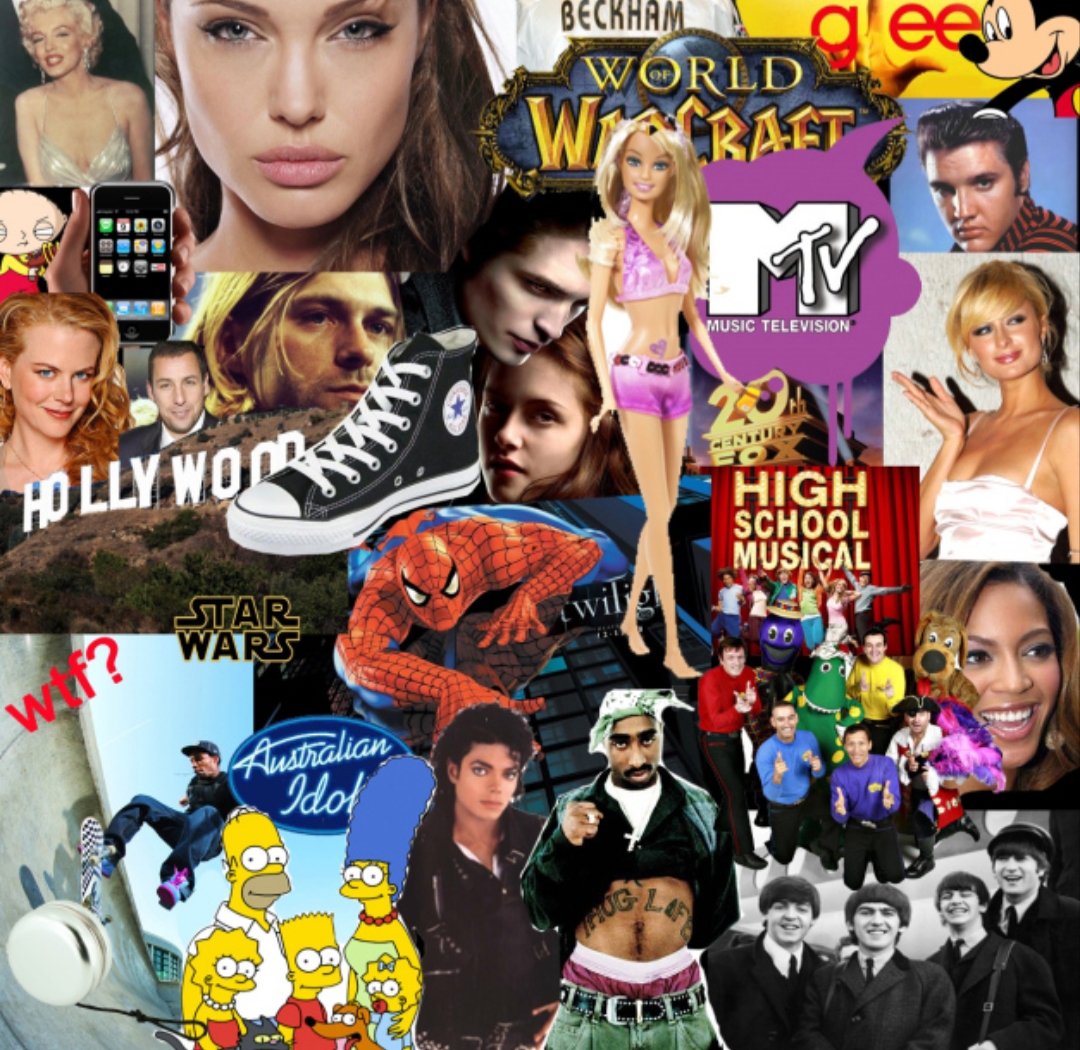
We can say that Postmodernism can come in many different forms as different people have different ideas. The people who take part in the debate of modernism and Postmodernism, share a unanimity that Postmodernism might be many things but certainly it linked with the growth of popular culture in the late twentieth century in the west. Postmodernism generally rejects stereotypes of all kinds. And also it embraces the notion of nostalgia in art like film, television, advertising and uses multiple references to communicate on the variety of symbolic level. In the word of Susan Sontag , a critic of American Culture, Postmodernism came with the emergence of a " new sensibility " and this involves a blurring of the distinction between " high " and " low " culture. Generally culture was that which would be accepted into a museum, it was homologous relationship with the elitism that is inherent in class society. The means is that the drive towards Postmodernism in the late 1950s and 1960s was associated with the elitism of modernism. A good example of Postmodernism is that popular culture can be seen in the American and British pop art movement of the 1950s and 1960s as it rejected the division between high culture and popular culture. This can be said to be " Postmodernism's first cultural flowering. " One of the famous Pop art's first prominent theorists Lawrence Alloway explains that, " the area of contact was mass produced  urban culture : movies, advertising, Science fiction, pop music. We felt none of the dislike of commercial culture standard among Intellectual but accepted it as a fact, discussed it in detail and consumed it enthusiastically. " This acceptance allowed people to treat popular culture in the realm of serious art and not a second tier of culture. 

Major Postmodernist and their views about Postmodernism:-

Jean Baudrillard:-

Jean Baudrillard was a French Sociologist, philosopher and cultural theorist. He is best known for his analysis of media, contemporary culture and also he is best known for his two major terms," Simulation " and " Hyperreal." For Baudrillard " Postmodernism marks a culture composed  of disparate fragmentary experiences and images that constantly bombard the individual in music, video, television, advertising and other forms of electronic media. The speed and ease of reproduction of these images means that they exist only as images, devoid of depth, coherence or originality. Now let us see brief information about hyperreal. Baudrillard has been referred to as " The high priest of Postmodernism. "

In Postmodernism hyperreal is an inability of consciousness to distinguish reality from a Simulation of reality especially in technologically advanced postmodern societies. For example 


Disney world and Las Vegas

The photos of a models in magazine which touched up with computers.

Jean Francois Lyotard :-

Jean Francois Lyotard is best known for his articulation of Postmodernism and the analysis of the impact of Postmodernity on the human condition. He was a sociologist, Literary theorist and philosopher. Jean Francois Lyotard argues that, " Stability is maintained through "Grand narratives " or " master narratives,"  Story a culture tells itself about its practices and beliefs in order to keep going. A grand narrative in American Culture might be the story that democracy is the most enlightened or rational form of government and that democracy will lead to universal human happiness. 

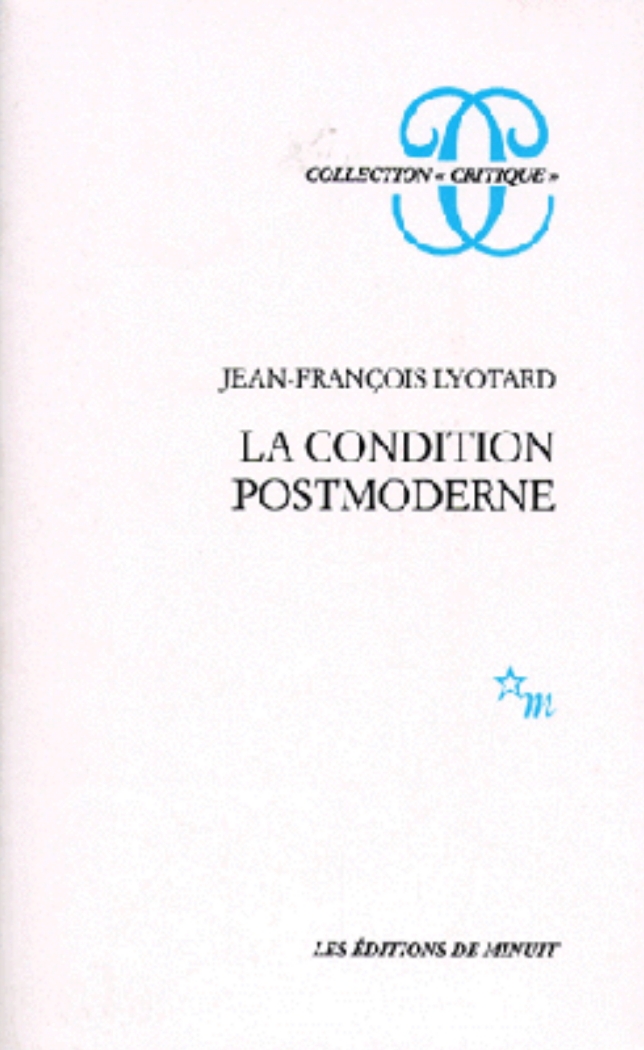
                   The Postmodern Condition:
                   A Report on Knowledge 


" The Postmodern Condition: A Report on Knowledge " is a book published in 1979 in which Jean Francois Lyotard analysis the notion of knowledge in postmodern society as the end of " Grand Narrative " or " Metanarratives " which he considers a quintessential feature of modernity. 

Conclusion :-

Thus, above all discuss it is clear that, what is Postmodernism. If anyone asks about the simple concept of Postmodernism than we can say that it was started during  mid - late 19th century and emerged in art, architecture, music, film, literature, sociology, communication, fashion and other many fields. Jean Baudrillard gave the term " Hyperreal " in which we can include many examples of modern time, especially advertisements. And also Jean Francois Lyotard, in his book, " The Postmodern Condition " discussed the grand narratives and metanarratives which are related to the Postmodern idea. And also I have put here how we can see Postmodernism in Popular culture especially in American Culture. 

Work Citation :-

Guerine, Wilfred L. A Handbook of
Critical Approaches to Literature.
Oxford University Press, 2005.

Latour, Brono. "Have Postmodernist
       Thinkers Deconstructed Truth?"
       New Humanist, 12 Mar. 2018,
       5296/have-postmodernist-thinkers-
       deconstructed-truth.

"Postmodernism In Pop Culture"               UKEssay.com 11, 2018. All Answer Ltd. 03,2020<https://www.ukessays.com/essays/media/post-modernism-in-pop-culture-and-the-simpsons-media-essay.php?vref=1>.